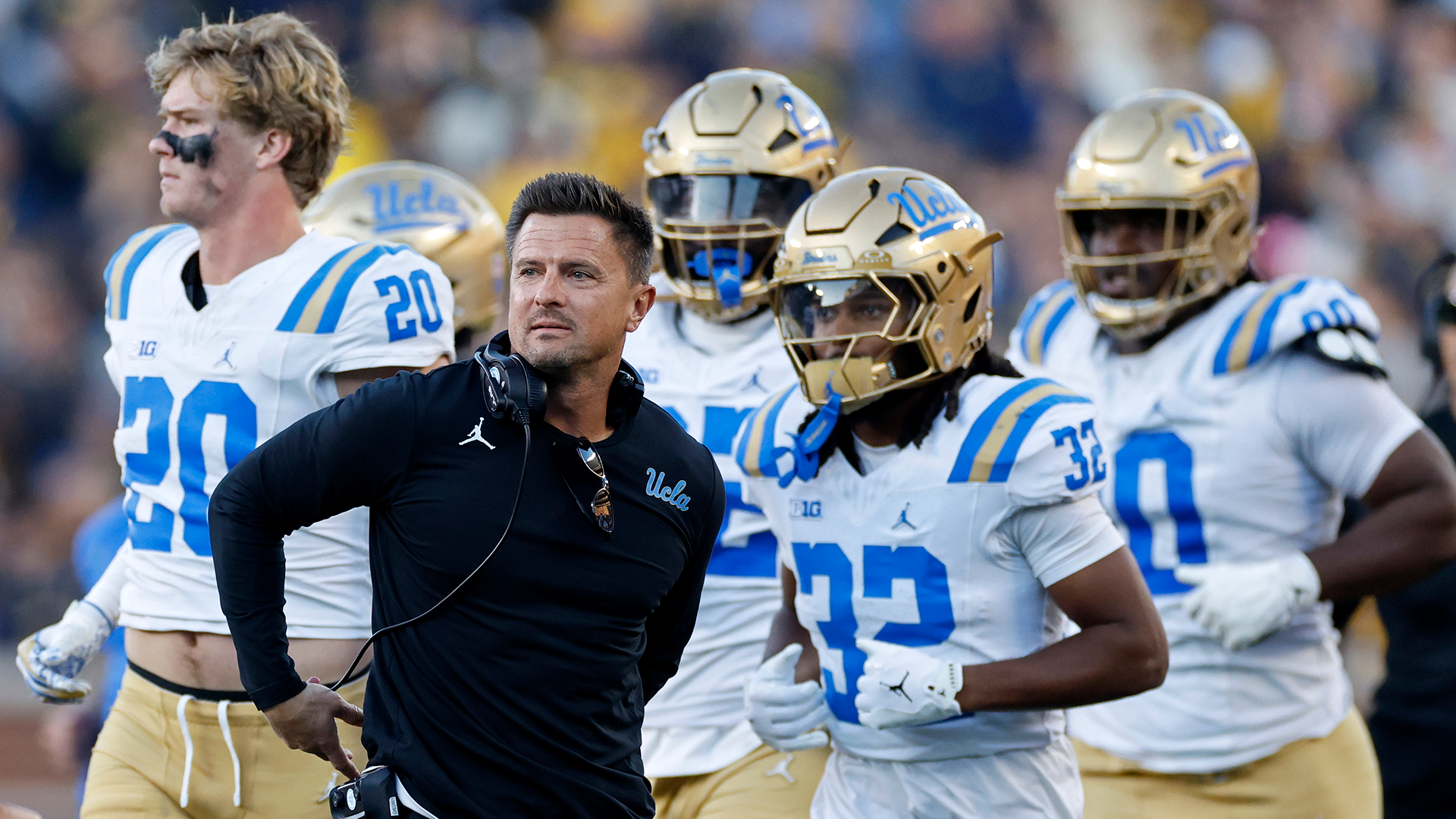
The Big Ten had a bad Saturday, and the conference title race is now harder to read than it should be. Indiana lost in overtime at Washington after hooking a game-tying field goal wide left. UCLA lost 18-16 at Michigan after its starting quarterback, Ty Dieffenbach, was carted off in the first overtime and the Bruins failed on their first two-point attempt in triple overtime. Two teams that entered the week in position for a playoff berth both stumbled, and the result is a four-team scramble for two spots in Indianapolis.
The report makes clear that UCLA still controls its own path. A win over USC in the finale puts the Bruins in the title game. But the same report also raises a fair concern: Dieffenbach's status is uncertain, third-stringer Madden Iamaleava was inserted into an offense that struggled badly in overtime, and that is a thin foundation for a must-win game against a rival.
The more uncomfortable point is how much of the outcome now depends on tiebreakers. The report lays out a chain of conditions involving common opponents, the Ducks' win over Ohio State, Minnesota against Wisconsin, Michigan's upset of Ohio State, and a cumulative conference winning percentage that will not be known until next week's results are final. Fans can follow that logic, but a title game spot should not hinge on a sequence this layered. A conference that wants its championship to feel decisive should make the path to it easier to understand than a flowchart.
None of this is a knock on the teams themselves. Indiana and UCLA each got a chance to reach the title game and lost in ways that were close, painful, and partly out of their control. Iowa and Oregon are in the mix because they kept winning. But the Big Ten's postseason picture is currently being decided as much by other teams' results as by the teams' own play, and that is a weak way to crown a champion.
The practical takeaway for the final week is simple: UCLA should want its quarterback situation clarified and its offense steadied before facing USC, and the league should look hard at whether its tiebreaker structure is serving the sport. A championship race that requires this much explanation has already lost some of its clarity.